
When Is 24 Hour In-Home Care at Home the Right Choice
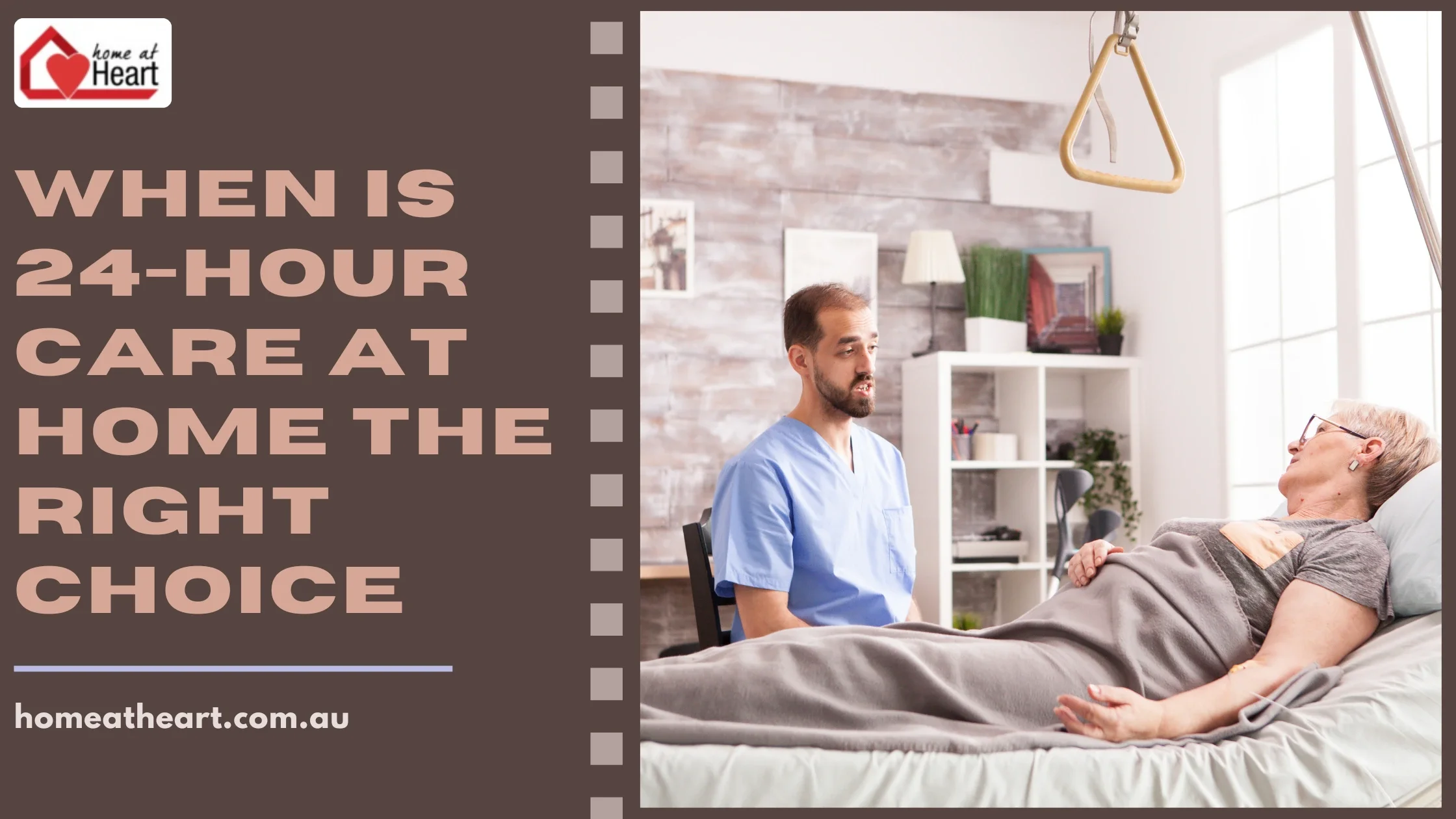
Watching a parent or partner become less able to manage on their own is one of the hardest things a family goes through. The worry often creeps in slowly until one day you realise they may not be safe alone anymore.
At Home at Heart, we help families across Wagga Wagga and the Riverina work through exactly this situation, and round-the-clock Support at Home is one of the options we discuss most.
This guide sets out clear signs that full-time care may be needed so you can act with confidence.
What Is 24-Hour Care at Home?
Round-the-clock care means a trained care worker is present in the home at all times, day and night, to assist an older person with whatever they need. It is the highest level of in-home support, designed for people who cannot safely be left alone at any point.
This kind of arrangement typically suits those with advanced health conditions, significant mobility problems, dementia, or a recent hospital discharge that has left them frail. The aim is to keep the person in their own home, surrounded by what is familiar, rather than moving into a residential facility.
What Are the Signs You Need 24-Hour Home Care?
Sign 1: Frequent falls or near misses
Falls are a clear warning sign. A single fall may lead to a fractured hip, a hospital stay, and a lasting loss of independence.
If your loved one has fallen more than once recently, or you keep hearing about near misses, that is a strong signal they need someone on hand at all hours. Falls often happen at night, on the way to the bathroom, when no one is around to help. Having someone available around the clock may reduce the risk of falls and ensures help is available promptly if one occurs.
Sign 2: Wandering or confusion, especially at night
Dementia brings changes that daytime supervision alone may not cover. Someone may seem settled during the day yet become confused, restless, or prone to wandering once it gets dark.
Night-time wandering is dangerous. A person might leave the house, turn on the stove, or fall in the dark. This is where a thoughtful care approach matters, because safety needs do not stop when the sun goes down. For people who regularly become confused or wander at night, overnight or 24-hour care may become necessary to help keep them safe.
Sign 3: Struggling with medications
Managing medications gets harder with age, and the consequences of getting it wrong can be serious. Missed doses, double doses, and confusion about timing may all cause harm.
Watch for signs like pills left in the packet, prescriptions running out too fast or too slow, or your loved one seeming unsure about what they have taken. When medication management slips beyond what daytime care can safely cover, having someone present around the clock supports medication management so doses are taken as prescribed.
Sign 4: Difficulty with everyday personal tasks
When basic self-care becomes too much, the need for full-time help is close. Look honestly at whether your loved one can still manage on their own.
Signs that daily tasks have become unmanageable include:
Wearing the same clothes for days
Skipping showers because they are afraid of falling
Losing weight because cooking is too hard
A home that has become cluttered or unclean
Personal hygiene declining when it was once well managed
When several of these appear together, occasional visits are no longer enough. This is often the point where families begin looking at 24-hour care at home as the way to keep their loved one safe and cared for.
Sign 5: Carer exhaustion in the family
Full-time caring takes a heavy toll. If you or another family member has become the round-the-clock carer, your own health matters just as much.
Exhaustion, resentment, broken sleep, and no time for yourself are all signs the load has grown too big to carry alone. Bringing in professional 24-hour in-home care protects both the older person and the family carer. It lets you step back into being a son, daughter, or spouse again, rather than a carer stretched beyond your limits.
Sign 6: A recent hospital stay
Coming home after a serious illness or surgery is a vulnerable time. Many older people are far frailer after a hospital stay than before, and the risk of a setback is higher in those first weeks.
Round-the-clock support during recovery may reduce the risk of complications and hospital readmission. At the same time, it gives the person the best chance of regaining their strength safely at home. When we talk with families about support at this stage, the goal is a safe recovery with someone always on hand to help.
How 24-Hour Care Works
Understanding the practical setup helps you plan. A small team usually delivers round-the-clock care, with care workers rotating throughout the day and night so someone is always alert and available.
Typically, this means two care workers working 12-hour shifts each, or three or more care workers working shifts of 8 hours or less. Overnight, the arrangement can be active care, where the care worker stays awake, or a sleepover arrangement where they rest but remain on call. Families in New South Wales looking into 24-hour and overnight care will find both models available, and the right one depends on how much help is needed through the night.
Choosing the Right Support for Your Family
Not all providers offer the same approach, so it pays to choose carefully. When comparing Aged Care Providers, look closely at how they staff overnight shifts, how consistent their workers are, and how they handle emergencies.
A few questions worth asking any provider:
How many care workers will be involved, and will they be consistent?
How are overnight hours staffed and charged?
What training do care workers have for conditions like dementia?
How quickly can care be arranged?
Good providers are upfront about all of this and take the time to understand your loved one’s specific situation before proposing a plan.
How Home at Heart Can Help
We are a family-owned and operated in-home care provider, established in the Riverina in 2017 and now serving Wagga Wagga, the wider Riverina, and Geelong. Our team supports older Australians across every level of need, from a few hours of help each week through to round-the-clock care.
As a local Aged Care Provider, we build each care plan around the individual, matching the same trusted care workers to your loved one wherever possible. This helps ensure they see familiar faces rather than strangers. We know how much consistency matters, particularly for people living with dementia or complex health needs.
If the signs in this guide sound familiar, it may be time for a conversation. A good aged care provider will listen first, understand your situation, and then talk through what care could look like.
For more information about how Home at Heart can support your care needs, please contact our team.
Call 1300 923 934 or visit homeatheart.com.au to talk it through.
Frequently Asked Questions
How much does 24-hour home care cost in Australia?
Depending on the person’s assessment and available Support at Home funding, government funding may contribute towards some care services. However, continuous 24-hour care often requires additional private funding because the cost exceeds the funding available for many participants.
How many hours is 24-hour care?
Twenty-four-hour care provides continuous support throughout the day and night. It is usually delivered by a team of care workers working rotating shifts, with the exact roster depending on the person’s needs, the provider’s staffing model, and whether overnight care is provided as an active overnight or sleepover service.
What is the difference between 24-hour care and overnight care?
Overnight care covers only the night hours, while 24-hour care provides support around the clock, day and night. Some families start with overnight cover and move to full 24-hour care as needs increase. A provider can help you work out which suits your situation.
Can my loved one stay at home instead of moving to a facility?
In many cases, yes. Round-the-clock in-home care enables people with higher needs to remain safely in their own homes. Whether it is suitable depends on the person’s health and home environment, which a provider can assess directly.
How quickly can 24-hour care be arranged?
Private care can often begin within a few days, as it does not depend on a funding queue. If you are using government funding, timing depends on your assessment and approval. Contacting a provider early generally gives you the most options.